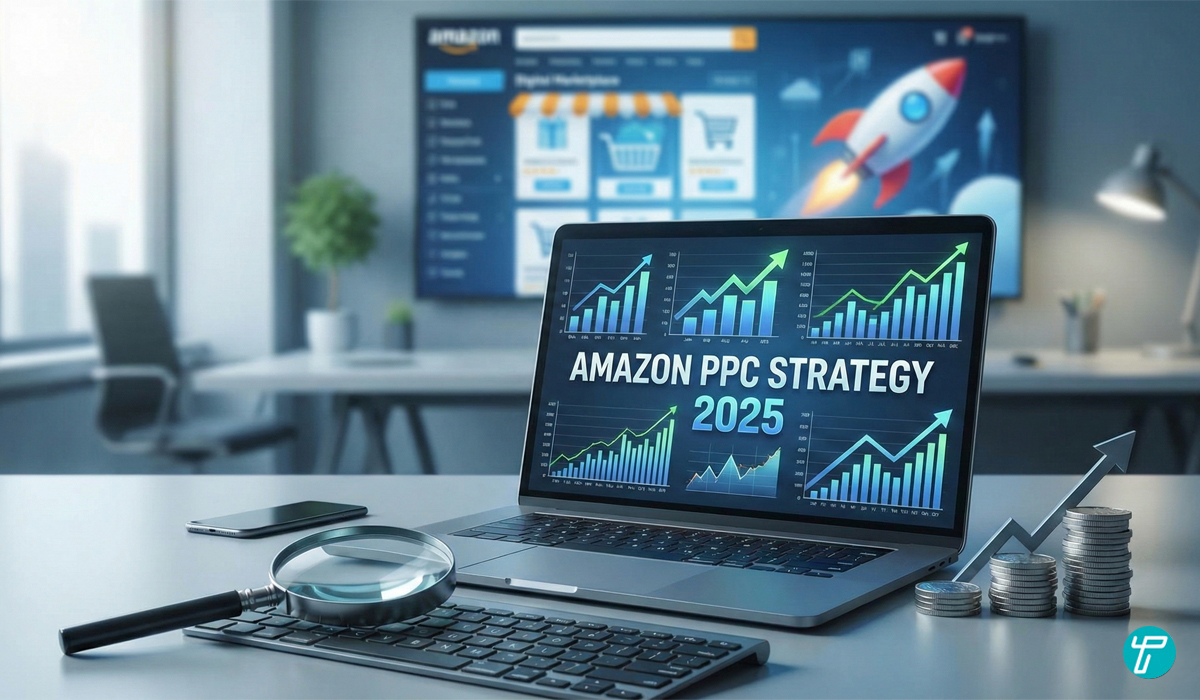
If you sell on Amazon, running paid ads is no longer optional. A clear, repeatable Amazon PPC Campaign Strategy helps you find customers, scale profitable products, and reduce wasted spend. This guide walks through the practical steps you need in 2025: how to set up campaigns, the metrics to watch, bidding and match-type tactics, creative options, and an optimization routine you can repeat for every product.
1. Start with the numbers (baseline metrics to measure)
Before you launch, gather baseline metrics for each SKU: margin, break-even ACoS, current conversion rate (CVR), average selling price (ASP), and unit contribution margin. Two useful benchmarks to keep in mind: many sellers see average ACoS around 25–35% as a general starting point, though category and goals change that; average platform conversion rates cluster around 9–11% overall, with well-optimized listings often reaching higher. Use these to calculate realistic targets (for example, target ACoS ≤ break-even ACoS when you’re scaling profitably).
2. Campaign structure that scales (simple, proven)
A repeatable campaign structure reduces noise and speeds optimization. A common, effective setup:
- Launch layer (0–14 days):
- 1 × Auto Sponsored Products (broad discovery)
- 1 × Manual Sponsored Products — Phrase
- 1 × Manual Sponsored Products — Exact
- 1 × Sponsored Brands (if brand-registered) with 2–4 SKUs
- 1 × Sponsored Display (views/retargeting)
- Scale layer (after discovery):
- Split winning keywords from Auto into separate manual campaigns (exact match first).
- Create bid tiers for high-converting vs exploratory keywords.
- Add product-targeting campaigns for competitor ASINs and categories.
This tiered approach finds keywords quickly with Auto, then funnels high-performing search terms into precise manual campaigns for bid control. Amazon’s official guidance and best-practice docs support using this mix of Auto + manual + brand/display placements to balance discovery and control.
3. Match types and negative keywords — the engine of control
Use match types intentionally:
- Exact: Preserve budget for proven, high-intent keywords (highest bid priority).
- Phrase: Capture close variants and long-tail intent.
- Broad: Use sparingly for exploration; monitor for irrelevant queries.
Set negative keywords at campaign level to prevent overlap between exact/phrase campaigns and reduce internal competition. Export search term reports weekly; add irrelevant terms as negatives immediately. Amazon documentation recommends separate bids for each match type and using negatives to avoid redundant spend.
4. Bidding strategy: dynamic where it matters
Amazon provides several bidding options. In 2025 the pragmatic approach is:
- Start with Dynamic Bids — Down Only for new launches to reduce overspend on low-probability clicks.
- For keywords with consistent, profitable performance switch to Dynamic Bids — Up and Down or Fixed bids when you want stable, predictable CPCs.
- Use placement adjustments sparingly: increase bids for “Top of search” only after you’ve validated that the keyword converts there.
Amazon’s bidding docs explain these modes; many sellers favor down-only early and then open up to up/down as conversion data accrues.
5. Creative & format: use video and creative testing
Video and richer creatives are becoming mainstream. Amazon’s AI video generator and other tools now let sellers create short product videos fast; use these in Sponsored Brands video and DSP where available. Test a short demo video vs a lifestyle image — videos often lift CTR and conversion for product categories where usage matters (toys, fitness, kitchen). The availability of rapid AI video generation is changing the creative cadence in 2025, so plan to refresh creative more often.
6. Metrics to track (and how to interpret them)
Track this daily to weekly, and use them to make bid and budget decisions:
- ACoS (Ad Spend ÷ Ad Revenue): primary profitability indicator. Compare to break-even ACoS.
- TACoS (Ad Spend ÷ Total Revenue): shows how ads affect total sales (useful for growth-stage decisions).
- CTR and CPC: signal ad relevance and competition.
- CVR (conversion rate): if low, improve listing (images, bullets, reviews, price) — ads can’t fix a bad listing.
- Return on Ad Spend (ROAS) / CAC: especially when buying external traffic or using DSP.
Industry data shows conversion rates vary by category (beauty typically higher, electronics lower); use category benchmarks to spot problems.
7. Optimization cadence: what to do and when
- Day 0–7 (launch): Monitor search terms and spend hourly to daily. Let Auto and broad tests run but cap total daily budget to avoid runaway spend.
- Day 8–30 (discover & refine): Pull winning search terms and move them into manual exact campaigns. Add negatives for irrelevant terms. Start adjusting bids by match type.
- Month 1–3 (scale): Pause low-performing keywords; increase budgets on profitable manual exact campaigns. Test Sponsored Brands creatives and Sponsored Display retargeting.
- Ongoing: Monthly creative refresh, quarterly full-audit (ACoS vs TACoS vs product margin).
Early monitoring needs higher frequency; once keywords stabilize, move to weekly and monthly optimization cycles.
8. When to use Sponsored Brands, Display, and DSP
- Sponsored Brands (SB): use for brand awareness and cross-sell if brand-registered. SB is useful for pushing multiple SKUs or featuring a hero product.
- Sponsored Display (SD): apply for remarketing to shoppers who viewed your product and to audience expansion.
- Amazon DSP: for audience-based scaling off-search (good when you have margin to acquire customers through upper-funnel channels).
Each format serves a different funnel stage — combine them to move shoppers from discovery to conversion. Official Amazon guides explain placement differences and use cases.
9. Budgeting and ROAS expectations
Set budgets by product priority:
- Hero / flagship SKUs: higher daily budgets to own top placements and collect data.
- Test SKUs: smaller budgets but wide coverage (auto + broad).
- Expect Customer Acquisition Cost (CAC) to vary widely by category — recent surveys put CAC averages in the tens of dollars range depending on the product. Track CAC alongside ACoS so you know whether an ad-driven sale is profitable after all costs.
10. Practical checklist (actions you can run now)
- Export current listing data: CVR, ASP, margin, Buy Box status.
- Create one Auto Sponsored Products campaign for discovery, set conservative budget.
- Create manual campaigns: exact and phrase; seed with initial keyword list from organic search and competitors.
- Turn on Dynamic Bids — Down Only for launch.
- Check search term report daily; move high-converting terms to exact campaigns and add irrelevant terms as negatives.
- Build Sponsored Brands creative (if brand-registered) and upload at least one short video asset.
- Measure ACoS, TACoS, CVR weekly; compare to break-even ACoS and adjust bids/budgets.
- Monthly: refresh creative and re-run keyword harvest.
Closing — What success looks like
A working Amazon PPC Campaign Strategy is repeatable: launch controlled discovery, extract high-value keywords, funnel them into tightly targeted manual campaigns, then scale with creative testing and cross-format ads. Success is measurable — a falling ACoS toward your profit target, rising TACoS stability, and consistent conversion rates above category benchmarks. Keep experiments small, measure quickly, and let the data tell you which keywords and creatives deserve budget.